Top Stories in AI Overviews: The Data, The Strategy, and The Impact of Blocking Google AI


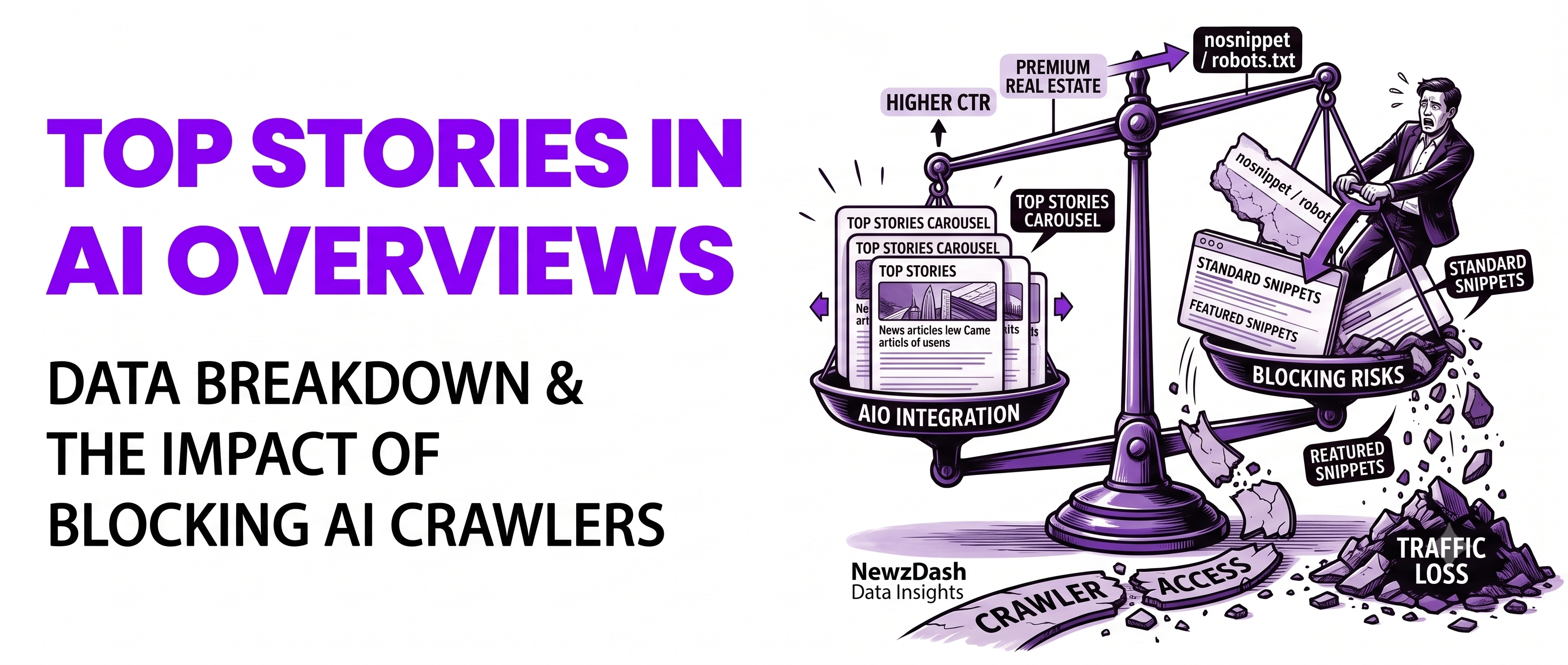
Top Stories in AI Overviews Create a New Opt-Out Tradeoff for Publishers
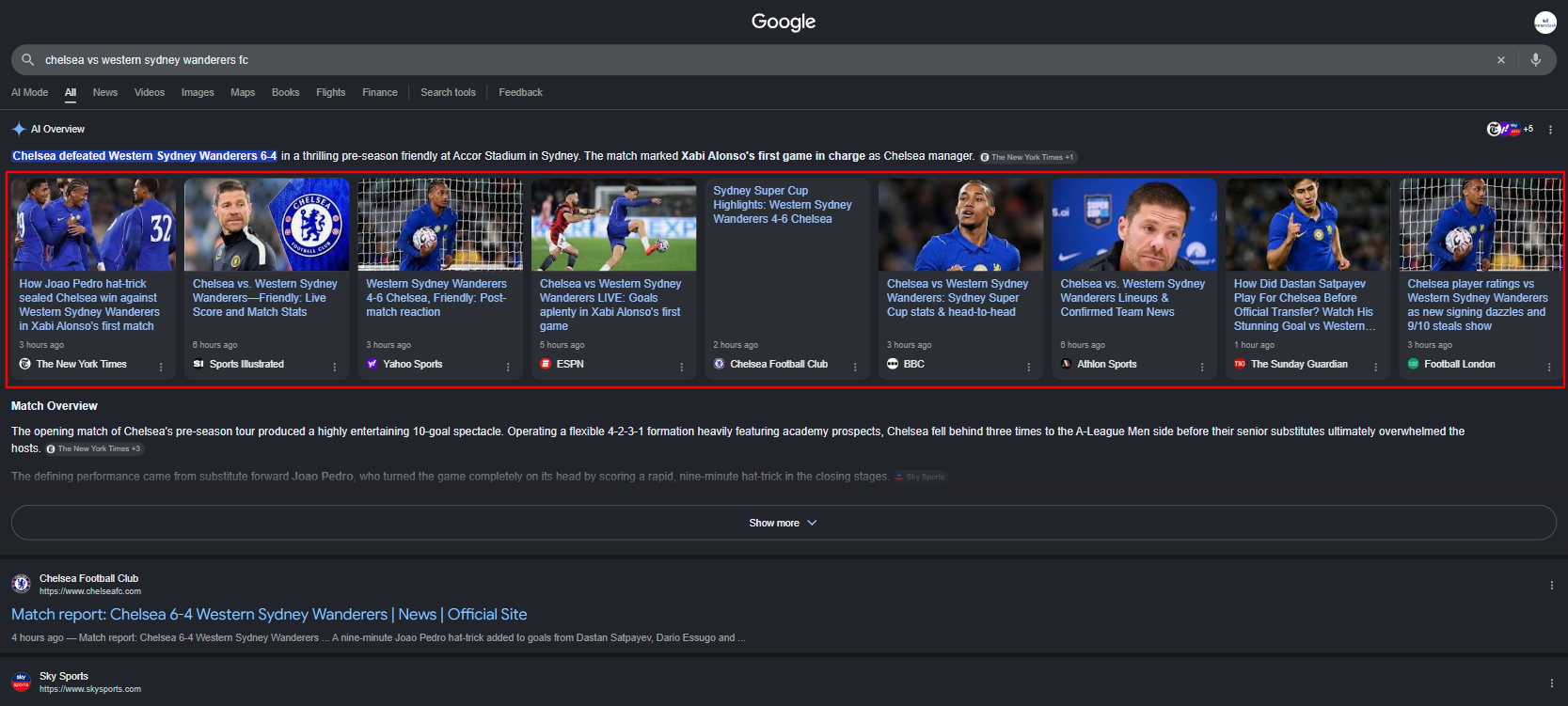
A few weeks ago, NewzDash started seeing full Top Stories carousels appear directly inside Google AI Overviews.
This changes the conversation around AI search for news publishers.
Until now, much of the debate focused on whether AI Overviews reduce publisher clicks by answering a query before users reach traditional search results.
Top Stories inside an AI Overview is not an additional second placement. In the search results tracked by NewzDash, Google displayed the carousel either inside the AI Overview or as a standalone Top Stories module, but not in both locations.
But when Google places Top Stories inside the AI Overview, publishers receive prominent headlines, images, branding, and links directly within the AI-generated result.
At the same time, Google has introduced new controls that allow some publishers to exclude their content from generative AI features without leaving traditional Search.
That creates a new tradeoff:
Publishers may be able to prevent their links and content from appearing in AI Overviews, but doing so may also cost them one of the most prominent new news placements in Google Search.

How often are Top Stories appearing inside AI Overviews?
In the current NewzDash dataset, we are seeing Top Stories inside AI Overviews only in the U.S. and U.K.
Among tracked trending-news search results where Google displayed Top Stories:
- 15.5% in the U.S. placed the Top Stories carousel inside the AI Overview rather than displaying it as a standalone module.
- 17.46% in the U.K. placed the Top Stories carousel inside the AI Overview rather than displaying it as a standalone module.
In the search results we tracked, the two placements were mutually exclusive. When Top Stories appeared inside the AI Overview, Google did not also display a separate standalone Top Stories carousel for the same result.
The rate varies significantly by category.
| Category | U.S. | U.K. |
|---|---|---|
| Entertainment | 35.05% | 31.52% |
| World | 31.79% | 18.90% |
| Sports | 16.45% | 21.05% |
| National | 20.82% | 16.07% |
| Technology | 18.25% | 11.09% |
| Business | 17.54% | 17.30% |
| Homepage, Breaking News and Major Headlines | 11.19% | 15.91% |
| Health | 1.52% | 0.00% |
| Science | 1.09% | NA |
Entertainment leads in both countries, exceeding 30%.
World News is also especially high in the U.S. at 31.79%, while Sports reaches 21.05% in the U.K.
Broad breaking-news and major-headline queries are lower than Entertainment and World. Health and Science remain close to zero in the current sample.
The data confirms a significant difference by category. It does not yet explain why those differences exist.
Google may treat news categories differently based on query intent, freshness, available sources, sensitivity, or other factors. More longitudinal data is needed before drawing conclusions about the cause.

Why placement inside an AI Overview matters
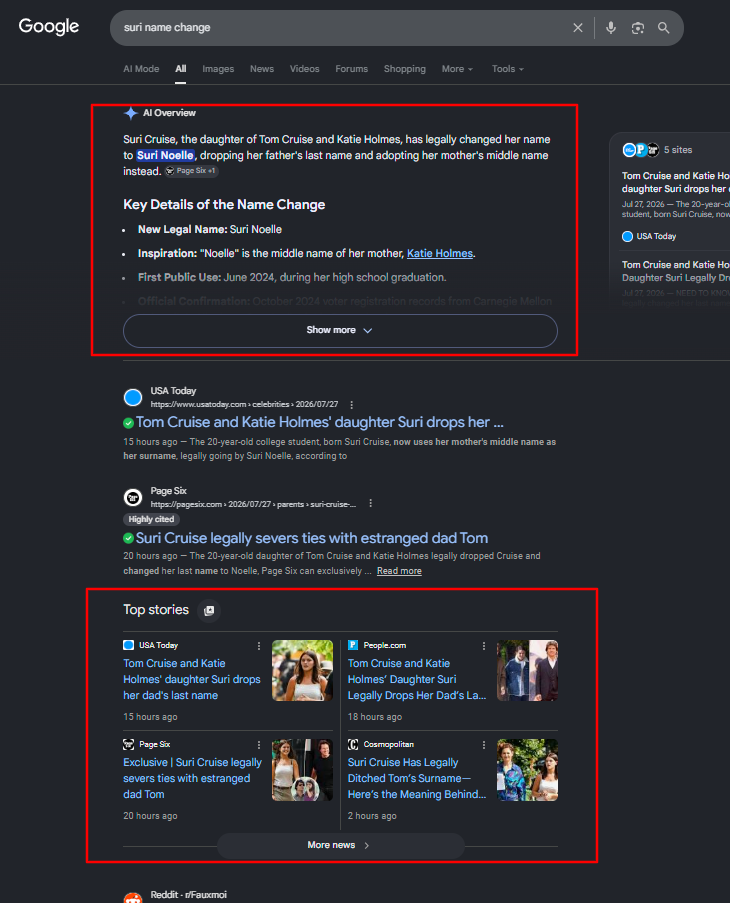 When Google shows a large AI Overview, a standalone Top Stories carousel may otherwise appear farther down the search results page.
Embedding Top Stories inside the AI Overview changes where the news module appears.
Instead of displaying Top Stories as a separate result below the AI-generated response, Google places publisher headlines, images, source names, and links directly inside the AI Overview.
In the search results tracked by NewzDash, this is an either-or presentation. Top Stories appears inside the AI Overview or as a standalone module, not in both locations at the same time.
This means the benefit is not additional duplicate exposure. The benefit is more prominent placement within the dominant search feature, potentially preventing publisher links from being pushed below a large AI response.
We do not yet have comparative click-through rate data showing that Top Stories inside an AI Overview receives more clicks than the standalone Top Stories carousel.
The accurate conclusion is:
Top Stories inside AI Overviews moves publisher links into a more prominent position within the AI result. This likely creates a stronger click opportunity than placing the standalone carousel below the AI Overview, but higher CTR has not yet been independently confirmed.
Blocking Google-Extended does not block AI Overviews
There is significant confusion about what happens when publishers block Google-Extended.
Google-Extended is a standalone robots.txt product token. Google says publishers can use it to manage whether content Google has crawled may be used for specified AI training and grounding purposes.
These uses include:
- Training future generations of Gemini models
- Grounding in Gemini Apps
- Grounding through Google Search in certain Vertex AI services
Most importantly for publishers, Google explicitly states that Google-Extended does not affect a site’s inclusion in Google Search and is not used as a Search ranking signal.
Source: Google: Google-Extended crawler documentation
Therefore, blocking Google-Extended does not, by itself, remove a publisher from:
- Traditional Google Search
- AI Overviews
- AI Mode
- Standard Top Stories
- Top Stories inside AI Overviews
Google-Extended controls specified AI training and grounding uses. It is not a Search visibility opt-out.
Publishers should not assume that adding the following rule will prevent their articles from being summarized or linked inside AI Overviews:
User-agent: Google-Extended
Disallow: /
A publisher may limit the uses covered by Google-Extended while remaining eligible to appear throughout Google Search.
The Search Console generative AI control is different
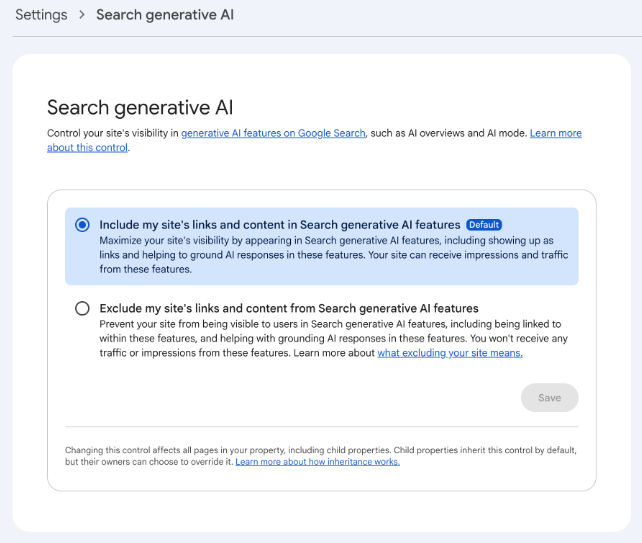
In June 2026, Google began testing a separate Search generative AI control in Google Search Console.
The initial rollout is limited to a subset of website owners in the U.K. Google says it plans to test the feature before making it available more broadly.
Source: Google: New generative AI controls for website owners
The control currently covers:
- AI Overviews
- AI Mode
- Generative AI features in Google Discover
Eligible publishers can select one of two main options:
- Include the site’s links and content in Search generative AI features.
- Exclude the site’s links and content from Search generative AI features.
When a publisher chooses exclusion, Google says the site’s links and content will not appear within the covered features.
The publisher’s content will also not be eligible for use as an input when generating an AI response or preview, and the publisher will receive no traffic or impressions from the covered generative AI features.
Source: Google Search Console: Search generative AI control
Google says this setting is not used as a ranking or inclusion signal affecting other parts of Search.
This means an eligible publisher can opt out of the covered generative AI features without using noindex, without blocking Googlebot, and without removing the site from traditional Google Search.
The Search Console control does not manage AI model training. Google directs publishers to Google-Extended for applicable training controls.
Would opting out in GSC remove a publisher from Top Stories inside an AI Overview?
Almost certainly, but Google has not explicitly confirmed the Top Stories module.
This is the most important unresolved question for news publishers.
Google’s documentation says that when a site is excluded:
- Its links will not appear in Search generative AI features.
- Its content will not be visible in those features.
- It will receive no traffic or impressions from those features.
A Top Stories carousel embedded inside an AI Overview is a collection of publisher links displayed within one of the covered generative AI features.
The logical interpretation is that a publisher using the exclusion control would no longer be eligible to appear inside the Top Stories carousel embedded within the AI Overview.
However, Google has not documented what would happen to the search-result layout. Google could remove the opted-out publisher while retaining the embedded carousel with other sources, show a standalone Top Stories carousel instead, or use another presentation.
Google documents the exclusion at the feature level, not at the individual-module level.
Until Google confirms this or a publisher completes a controlled test, NewzDash considers the loss of embedded Top Stories visibility a high-confidence interpretation, not a directly confirmed result.
What happens to standard Top Stories?
A publisher using the Search Console generative AI exclusion should remain eligible for traditional Search features, including standalone Top Stories, because Google says the setting is not used as a ranking or inclusion signal elsewhere in Search.
However, Google has not documented how the search-result layout changes when a publisher is excluded from an embedded Top Stories carousel. Eligibility for standalone Top Stories does not guarantee that Google will display a standalone carousel for the same query.
Source: Google Search Console: Search generative AI control
The U.K. Competition and Markets Authority also requires Google to provide publishers with controls over the use of their content in Google’s generative AI services, while preventing unfair treatment in general Search.
Source: U.K. CMA: Fairer deal for publishers and Google Search controls
Based on Google’s published rules:
- Top Stories inside the AI Overview: the opted-out publisher would likely be excluded.
- Standalone Top Stories: the publisher should remain eligible, but Google may not necessarily display a standalone carousel for the same query.
- Traditional organic Search: should remain eligible.
- AI Overview citations and links: excluded.
- AI Mode links: excluded.
- Covered generative Discover links: excluded.
Google has not yet published a Top Stories-specific test confirming this exact split.
The controls publishers should not confuse
| Publisher control | What it does | Expected visibility impact |
|---|---|---|
| Google-Extended | Controls specified Gemini training and grounding uses | Does not affect Google Search inclusion or rankings |
| Search Console generative AI exclusion | Removes links and content from AI Overviews, AI Mode, and covered generative Discover features | Other parts of Search should remain unaffected |
| nosnippet or max-snippet:0 | Restricts or removes text snippets and direct content input for AI features | Also affects snippets in traditional Google Search |
| noindex or blocking Googlebot | Prevents indexing or crawling for Search | Can remove the page from Search and other Google surfaces |
Google confirms that nosnippet applies across Web Search, Google Images, Discover, AI Overviews, and AI Mode. It also prevents the page’s content from being used as a direct input for AI Overviews and AI Mode.
Source: Google: Robots meta tag and snippet controls
This makes nosnippet a much broader and potentially more damaging option than the dedicated Search Console control.
The publisher decision is no longer simply about AI summaries
Publishers considering an AI opt-out now need to evaluate both content usage and distribution.
Using the Search Console exclusion may prevent Google from using and displaying a publisher’s reporting within covered generative Search results.
But it may also mean losing:
- AI Overview citations
- AI Mode links
- Generative AI visibility in Discover
- Top Stories placements inside AI Overviews
For publishers that already block Google-Extended, the decision is different.
Blocking Google-Extended does not remove their Search visibility and should not affect their eligibility for Top Stories inside an AI Overview.
The two controls should not be treated as interchangeable.
What publishers should do before opting out
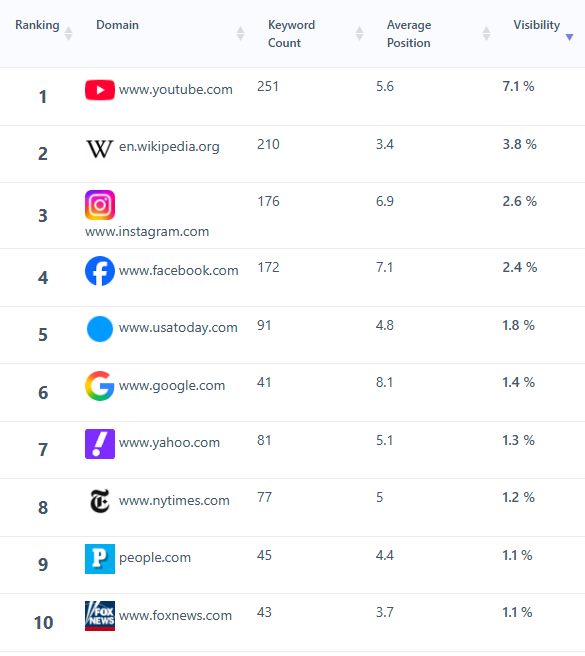
Publishers with access to the new Search Console control should measure the potential visibility loss before making a sitewide decision.
Google has also introduced dedicated generative AI performance reporting that can show data such as impressions, pages, countries, devices, and performance over time.
Source: Google Search Central: Generative AI performance reports
Publishers should review:
- How often their URLs appear in AI Overviews - NewzDash Tracks publisher visibility in AI Overviews.
- How frequently their Top Stories rankings are embedded inside AI Overviews
- Which sections receive the most generative AI exposure
- How often Top Stories moves from a standalone module into the AI Overview
- Whether publisher composition changes between embedded and standalone Top Stories results
- Whether opting out causes Top Stories to return as a standalone module or removes only the opted-out publisher
- How much traffic and visibility could be lost by opting out
Google’s control also supports inheritance between parent and child Search Console properties, including URL-prefix properties.
This may allow some publishers to test the exclusion on a specific section before applying it across the entire domain.
Source: Google Search Console: Generative AI control inheritance
Blocking Google Crawlers & AI Impact on News Publishers
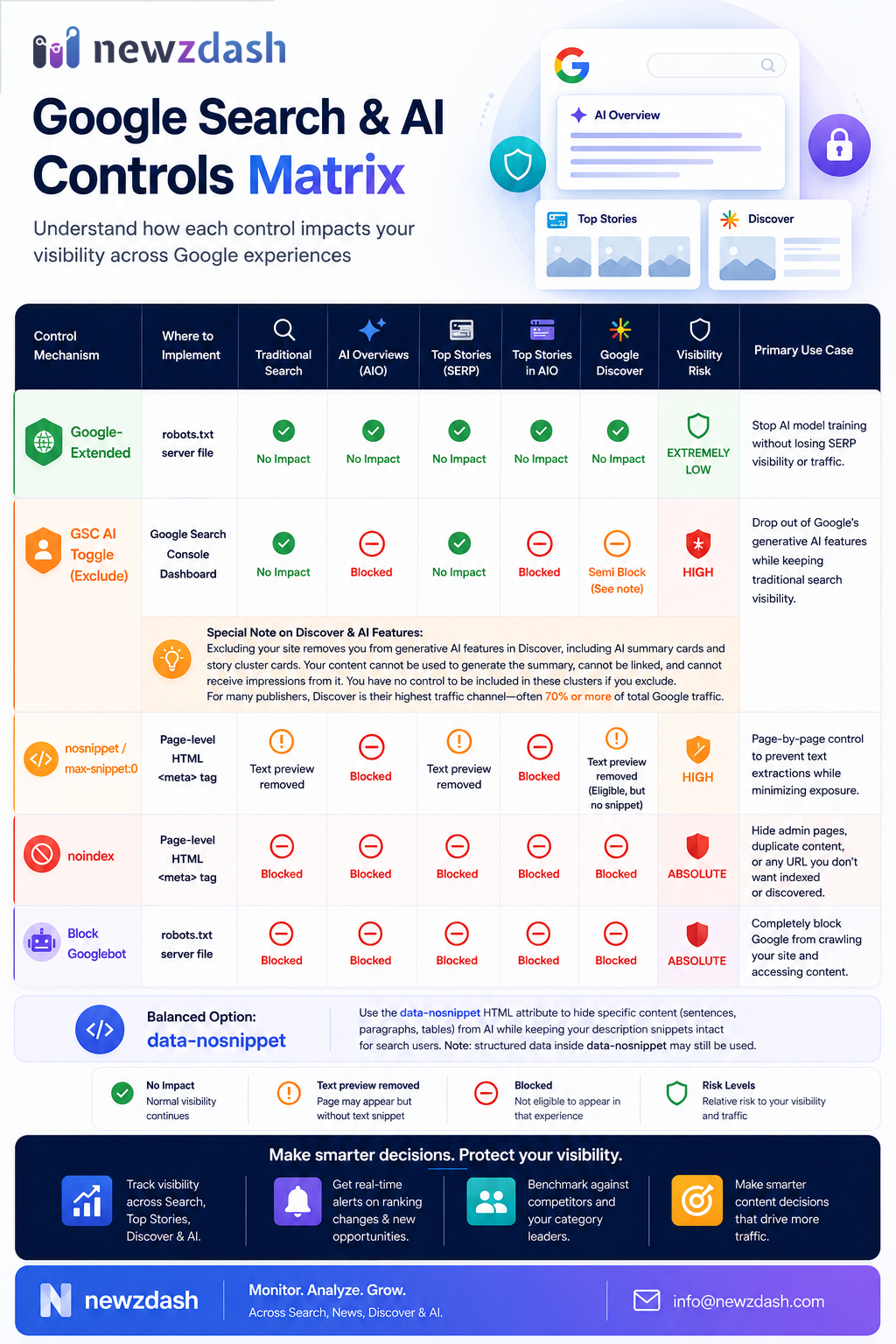
Blocking Google AI is not one decision. The control you choose can preserve your visibility or remove it.
Here is a quick chart breaking it down.
My recommendation for most publishers:
↝ Block Google-Extended unless you have a paid agreement with Google or a strategic reason to allow your content to support Gemini training and grounding.
↝ Google says blocking Google-Extended does not affect Search inclusion or rankings. It also does not opt publishers out of AI Overviews, Top Stories, or Discover.
↝ Be much more careful with the Search Console generative AI exclusion.
That setting removes your links and content from AI Overviews, AI Mode, and generative AI features in Google Discover. Google says excluded publishers receive no impressions or traffic from those features, while other eligible publishers may still appear.
The Discover impact is especially important.
↝ Google is introducing AI-generated summaries and clustered experiences within Discover. Publishers do not have a separate control that lets them block the AI summary while keeping their links and attribution inside the same generative feature.
↝ Excluding your site means your content cannot be used in the summary, cannot be linked from that feature, and cannot receive impressions or traffic from it.
↝ For many publishers we work with, Discover represents **70% or more of their Google traffic**. Giving up visibility in generative Discover experiences could therefore carry a much larger risk than losing an AI Overview citation alone.
↝ The nosnippet tag triggers a "Semi-Block" on Google Discover because it legally forces Google to strip away the descriptive text preview required to build a standard visual feed card. Without this text, the incomplete card layout breaks the user experience, prompting Discover's matching algorithms to heavily suppress your article's impressions and reach. To protect proprietary content from AI summaries without destroying your traditional Discover traffic, you should use the inline data-nosnippet HTML attribute to block only specific sections of text while leaving the rest open for standard previews.
The key distinction:
Google-Extended limits certain AI training and grounding uses without sacrificing Search visibility. The GSC AI exclusion removes publishers from Google’s user-facing generative features and carries a much higher visibility and traffic risk.
The bottom line
Top Stories inside AI Overviews does not give publishers a second Top Stories placement.
In a growing share of the trending-news search results tracked by NewzDash, Google is placing the Top Stories carousel inside the AI Overview instead of displaying it as a standalone search feature.
This may benefit publishers because their headlines, images, branding, and links appear directly inside the dominant AI result rather than below it.
But Google’s Search Console generative AI control creates an important tradeoff.
Blocking Google-Extended does not, by itself, affect Search visibility. Excluding a site through the Search Console generative AI control removes its links from covered AI features and will likely prevent the publisher from appearing in Top Stories embedded inside AI Overviews.
The publisher should remain eligible for standalone Top Stories because Google says the exclusion setting is not used as a ranking or inclusion signal in other parts of Search.
However, eligibility does not guarantee that Google will display a standalone Top Stories carousel for the same query after the publisher opts out. Google has not documented whether it would move Top Stories outside the AI Overview, retain the embedded carousel with other publishers, or use another search-results layout.
For publishers, the decision is no longer only about whether Google can use and display their reporting in generative AI features.
It is also about whether they are willing to give up a prominent Top Stories placement inside the AI Overview without knowing whether that visibility will be replaced by a standalone Top Stories module.
NewzDash will continue tracking Top Stories inside AI Overviews across countries, categories, publishers, and queries.
We will also test whether publishers using Google’s exclusion control disappear from the embedded Top Stories carousel while remaining eligible for standalone Top Stories.